
Trust AI agents in production
Monitor LLM calls, agent workflows, token cost and response quality and catch hallucinations before customers see them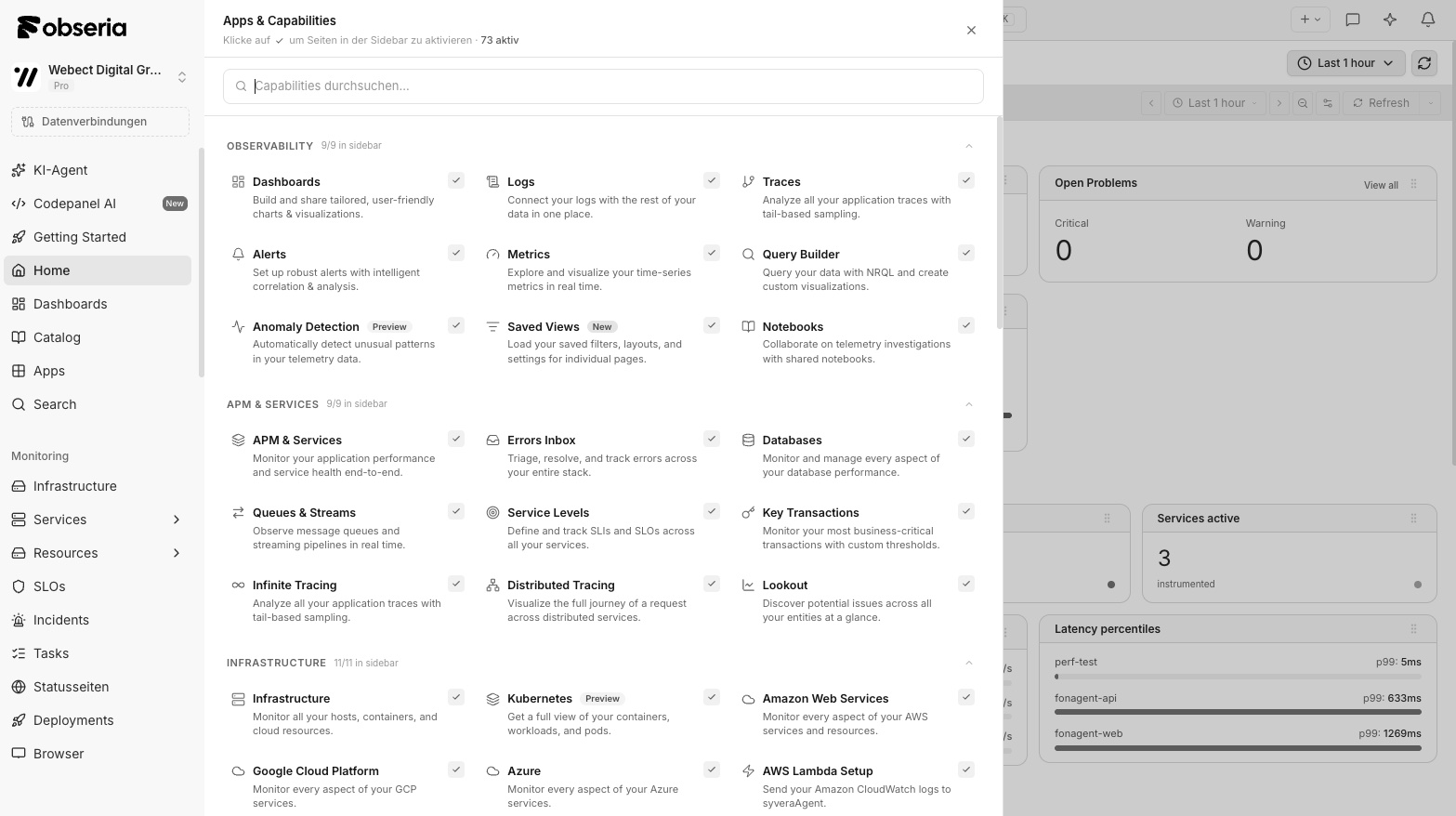
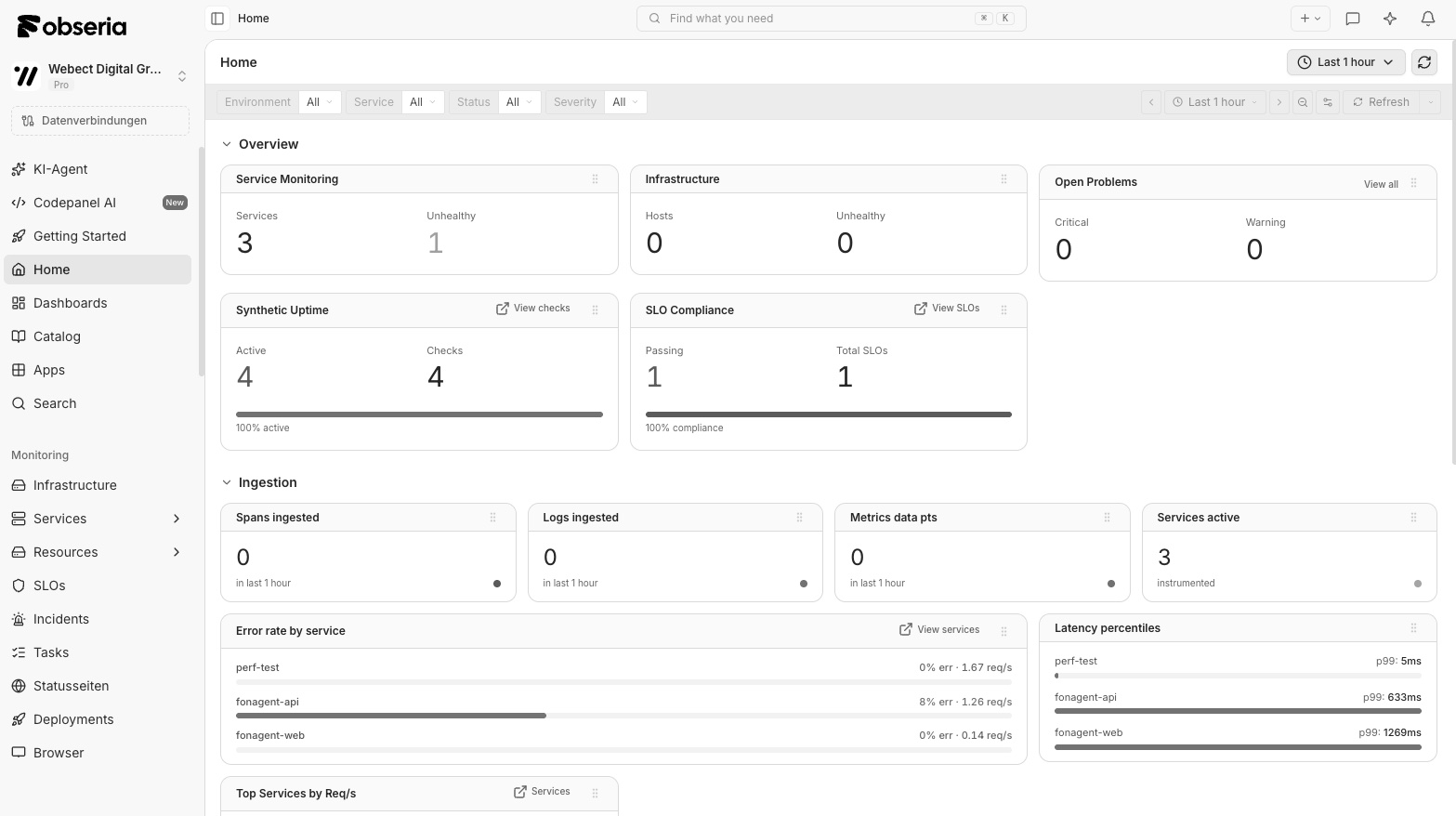














The blueprint for trustworthy AI agents in production
Nov 10–12: observability, guardrails and cost control for GenAI. Register now.
Register nowObservability for the AI era
GenAI applications are non-deterministic. Obseria makes them manageable anyway: with traces, quality metrics and cost transparency.Trace every LLM call
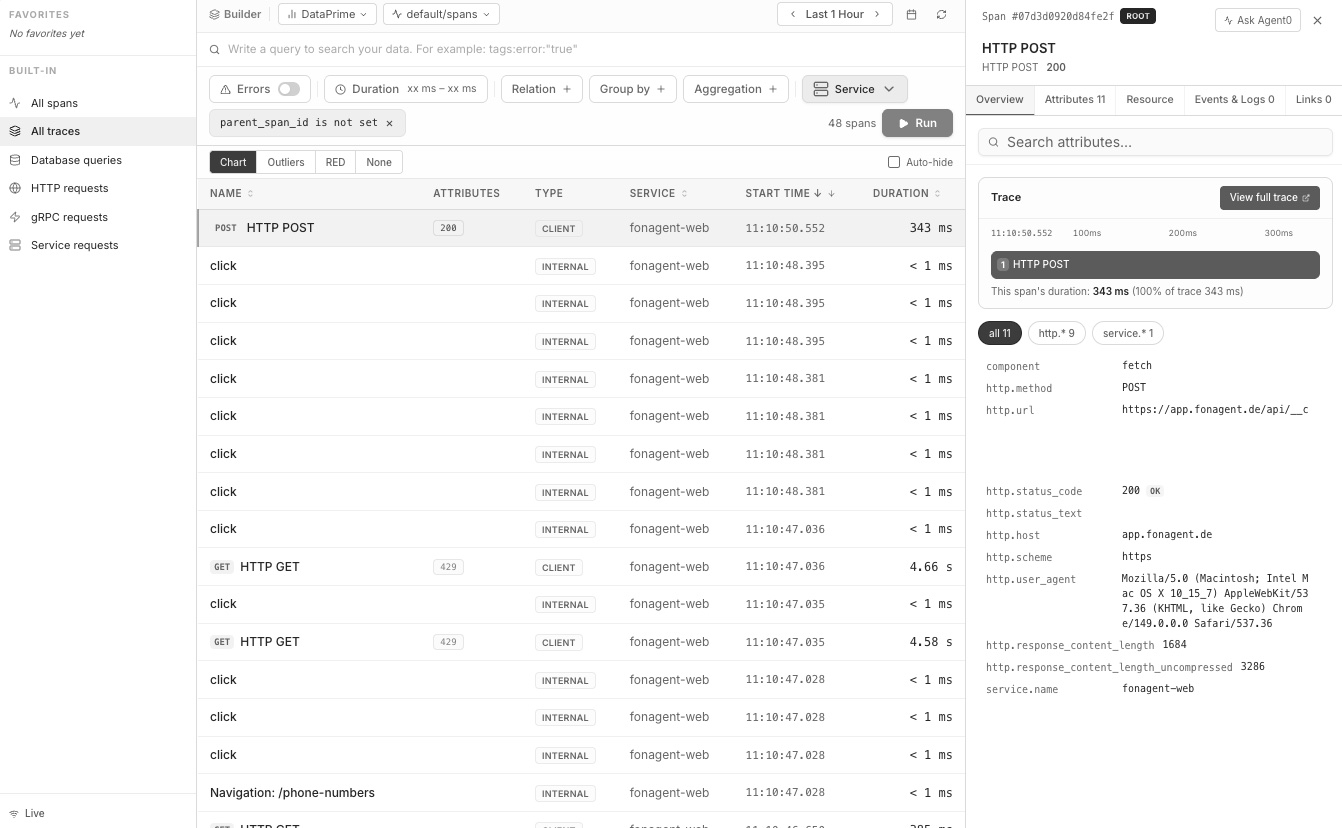
Prompts, responses, tool calls and retrieval steps as a trace, with latency, token usage and cost per model, application and tenant.
Monitor quality and guardrails
Automatically score hallucinations, toxicity, PII leaks and prompt injections. Violations land in the review queue before they reach customers.
Keep cost under control
Token cost per feature, team and user in real time. Budgets, anomaly alerts and recommendations for cheaper models at the same quality.
45% lower LLM cost
Deltaforge routes requests to cheaper models based on quality metrics.
Read the Deltaforge story< 2 h to detect quality drift
Cobalt Insurance detects declining response quality after model updates within hours instead of weeks.
Read the Cobalt story100% of agent actions auditable
Granit Public logs every tool call of citizen chatbots in an audit-proof way.
Read the Granit story0 unchecked prompt injections
Helios Bank blocks prompt injection attempts automatically via guardrail policies.
Read the Helios storyEmpower your business with AI-driven observability
Harness trusted answers instead of alert floods, for measurable business outcomes at scale
Explore the Obseria approachFrom signal to answer in three steps
- Step 1
Instrument your AI stack
OpenTelemetry GenAI conventions capture LLM calls, tool use and retrieval from your SDKs and frameworks.
- Step 2
Evaluate every response
Built-in evaluators score relevance, faithfulness, toxicity and PII leaks and route violations to review.
- Step 3
Control cost and quality
Token cost, latency and quality per model, feature and tenant, with budgets and alerts.
What's included
- LLM, agent and RAG tracing
- Quality evaluations and guardrails
- Token cost per model, feature and tenant
- Prompt injection and data leak detection
- Model and prompt version comparison
- Audit trail for every agent action
Explore capabilities in detail
Products for GenAI in production
LLM Tracing
Prompts, responses, tools and retrieval as OpenTelemetry traces.
Agent Monitoring
Follow multi-step agent workflows, tool calls and decisions.
Guardrails & Evaluations
Quality scores, policies and review queues for responses.
Cost Control
Token cost per model, feature and tenant with budgets and alerts.
Application Security
Detect prompt injections and data exfiltration at runtime.
OpenTelemetry GenAI
Native support for the OTel semantic conventions for GenAI.
AI observability use cases with Obseria
Chatbots and copilots with quality and cost
Every conversation as a trace with prompt, retrieval context, model response and evaluation. Quality metrics such as relevance, faithfulness and toxicity are computed automatically.
Explore LLM TracingMulti-step agents and tool calls
Agent workflows with planning, tool calls and feedback loops are visualized as a graph. Infinite loops, failed tools and cost explosions are detected immediately.
Explore Agent MonitoringMeasure retrieval quality
Embedding latency, hit relevance and context-window usage per query. Detect when vector indexes go stale or chunks are missing.
See integrationsConnect production to the code that created it
Obseria links incidents to pull requests and the coding agents that wrote them. Failure patterns flow back as context into the development process.
For developersWorks with your stack
Connect the technologies you already run. 700+ integrations, discovered and put into context automatically.


Leading organizations that run on AI Observability
Get started with AI Observability training and documentation
AI Observability FAQ
AI observability monitors AI applications in production: LLM calls, agent workflows, retrieval pipelines, cost, latency and response quality. Because LLM output is non-deterministic, it extends classic observability with quality metrics and guardrails.
Claude, OpenAI, Gemini, Mistral, Llama and models on Bedrock, Vertex AI and Azure AI, as well as frameworks such as LangChain, LlamaIndex, Vercel AI SDK, Semantic Kernel and the Claude Agent SDK, via OpenTelemetry GenAI conventions.
Configurable. Content can be stored in full, masked or only as a hash. PII is detected and masked automatically, data stays in the EU.
Through LLM-based evaluators that score responses against retrieval context and references, combined with rule checks and user feedback. Scores and thresholds are configurable per application.
Ready for observability that delivers answers?
Take the first steps toward reliable operations