
Observability for financial services: resilient, compliant, trusted
Follow every payment and policy from mobile app to mainframe, prove operational resilience under DORA and fix incidents before customers lose trust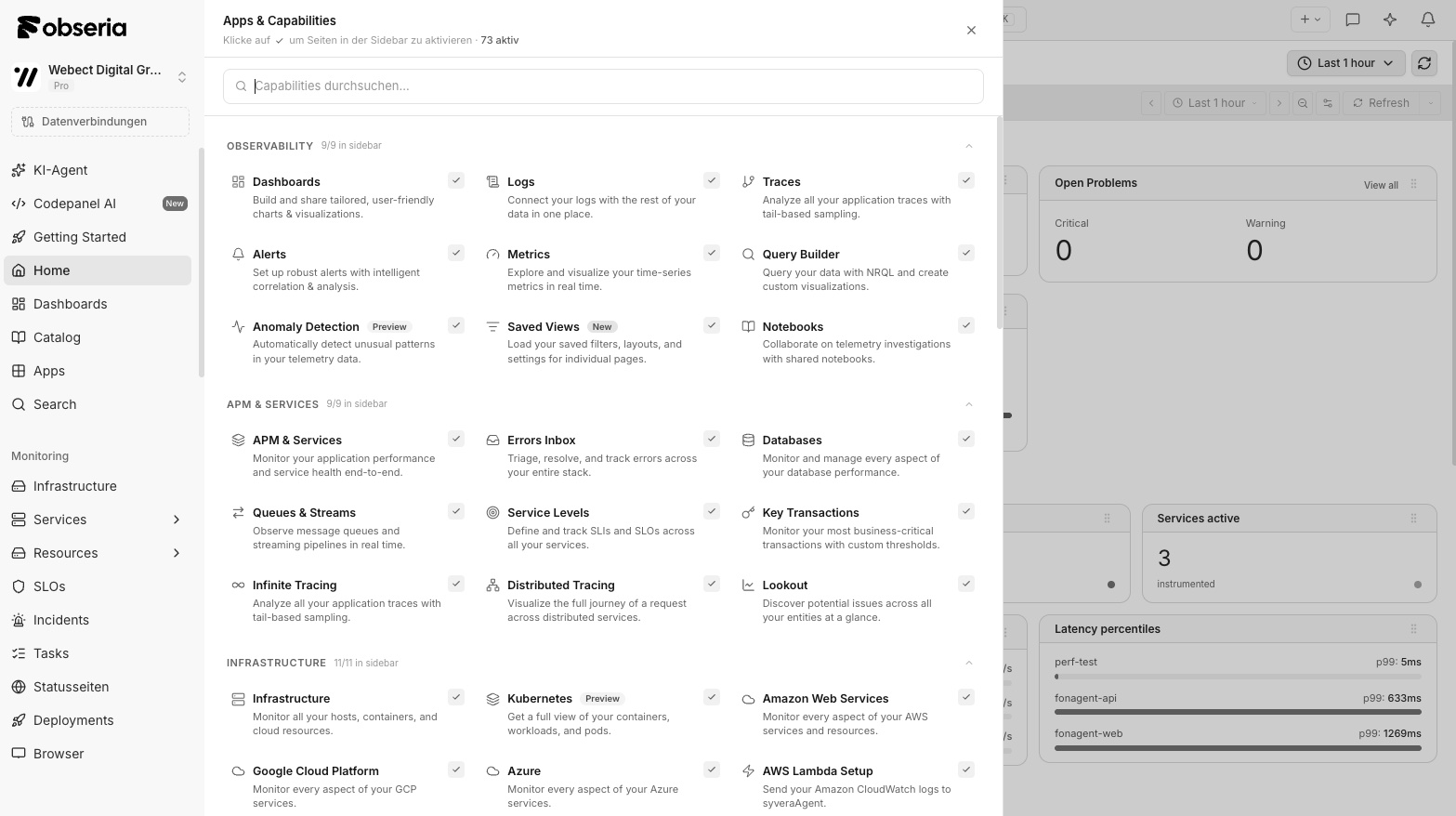
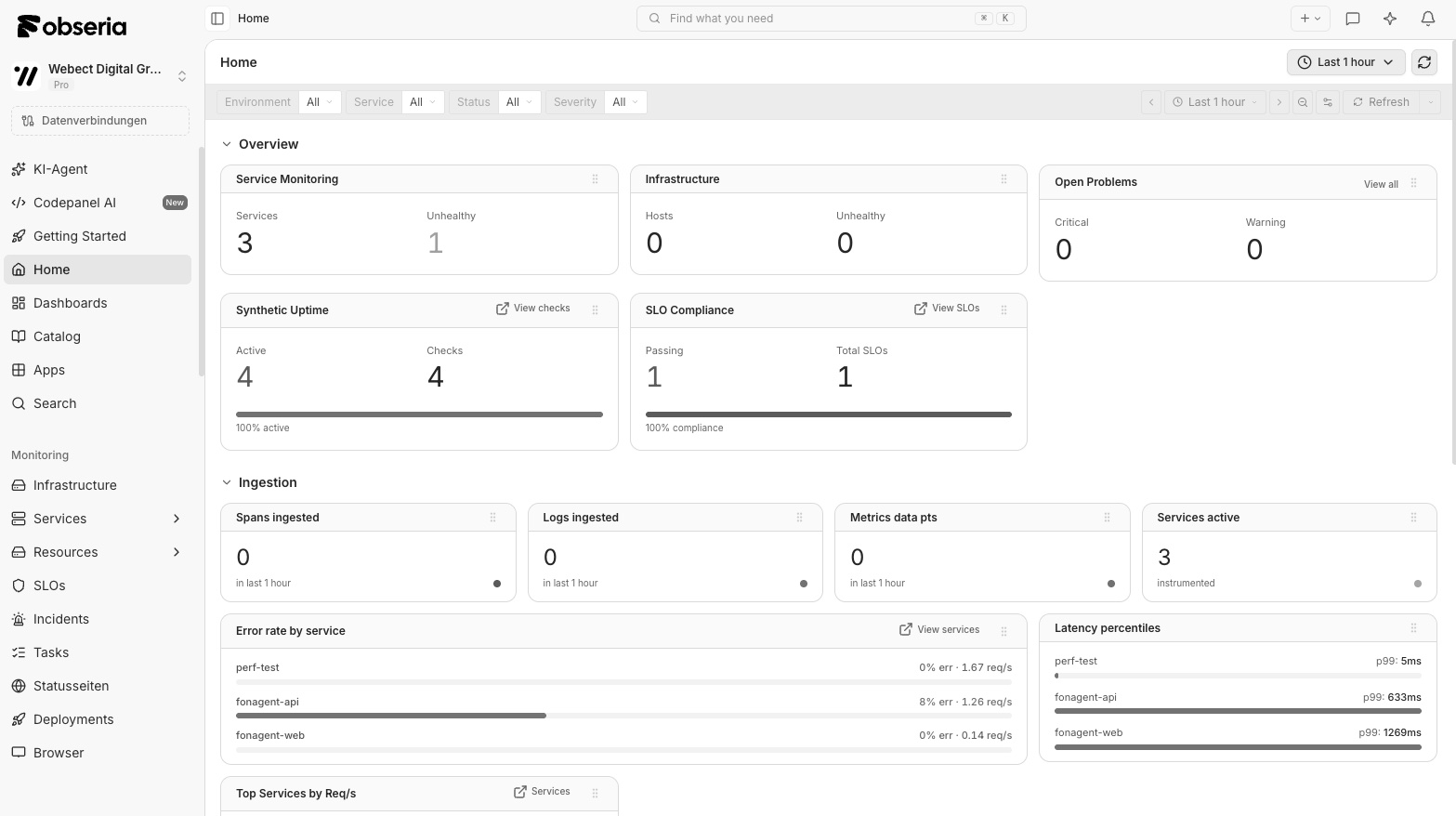














DORA in practice: evidence from your telemetry
How banks turn observability data into ICT incident reports and resilience tests.
Read nowIn finance, every minute of downtime is a headline.
Customers expect instant payments 24/7, regulators expect proof of resilience, and IT spans mainframe, private cloud and SaaS.Hybrid estates, end to end
A single transfer touches mobile apps, APIs, core banking on the mainframe, payment schemes and third-party providers. Gaps between tools hide the root cause.
Regulation demands evidence
DORA requires ICT incident classification, reporting and resilience testing. Evidence scattered across tools makes audits slow and risky.
Digital trust is fragile
A failing login or slow payment confirmation drives customers to competitors and to social media within minutes.
90% lower MTTR
Helios Bank consolidated seven monitoring tools and cut time to resolution from three hours to 18 minutes.
95% fewer CVEs to review
Runtime vulnerability analytics prioritizes by real exposure instead of CVSS score.
€2.4M incident impact quantified
Business observability reports incidents to management in euros, not error rates.
99.99% availability proven
Synthetic checks of login and transfers from 20 regions back SLA reporting.
Observability use cases for Financial Services
Banking, payments and insurance: where financial institutions start with Obseria.Banking and payments
End-to-end transaction tracing
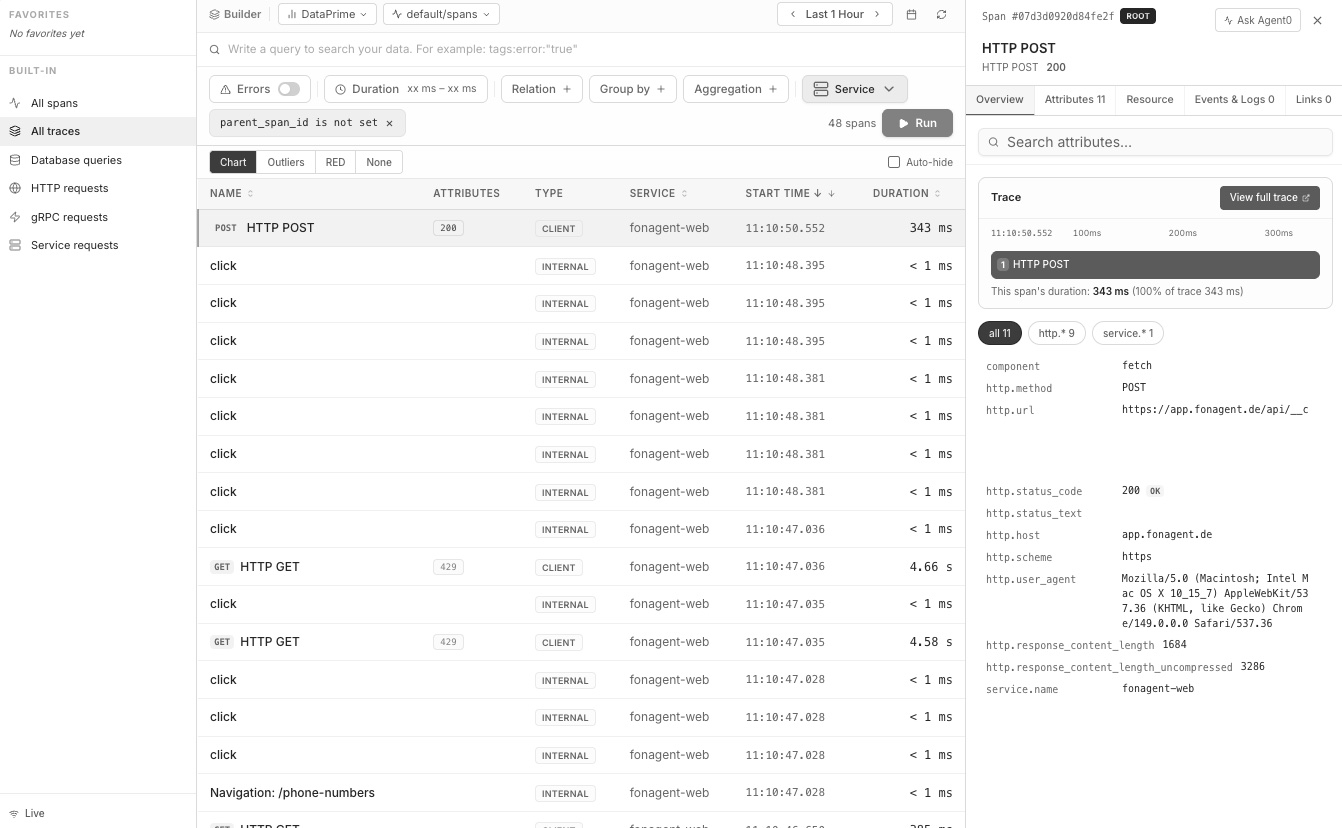
Trace payments and transfers from app and API gateway through middleware to mainframe and payment schemes, including instant payments.
Distributed tracingDigital banking experience
Real user monitoring and synthetics for login, onboarding and payment flows, linked to backend performance.
Digital experiencePayment business KPIs
Monitor payment volumes, approval rates and failed transactions in real time next to technical health.
Business observabilityRisk, security and compliance
Runtime application security
Detect vulnerabilities and block injection attacks in banking applications at runtime, with the same context as observability.
Application securityAudit-proof log retention
Immutable retention for up to ten years, field-level access control and queries for auditors in seconds.
Log analyticsICT incident classification
Problems carry affected services, clients and duration, the inputs needed for DORA classification and reporting.
Obseria IntelligenceInsurance and capital markets
Policy and claims platforms
Monitor quote, policy and claims applications across legacy and cloud, including batch jobs and document generation.
Application observabilityTrading latency
Measure latency per order path and market data feed with high-resolution metrics and alert on SLO breaches.
Infrastructure observabilityAI in customer service
Monitor LLM-based assistants for quality, cost and guardrail violations before they reach customers.
AI observabilityOperational resilience you can prove
Financial regulators expect institutions to detect, classify and report ICT incidents and to prove resilience. Obseria provides the data foundation.
- DORAIncident detection, classification inputs, reporting evidence and resilience test data.
- EBA guidelines and MaRiskMonitoring evidence for ICT and security risk management.
- PCI DSS 4.0Masking of card data in logs and traces, audit trails for access.
- Third-party riskVisibility into dependencies on cloud and payment service providers.
- BSI C5, ISO 27001, SOC 2 Type IICertified operation, EU data residency or deployment in your own cloud.
DORA turned incident reporting into a race against the clock. Obseria gives us affected services, clients and impact in minutes, with evidence our auditors accept.
The Obseria platform for Financial Services
Business Observability
Payment volumes, approval rates and incident impact in euros.
Learn moreApplication Observability
Tracing from app to mainframe with code-level context.
Learn moreApplication Security
Runtime vulnerability analytics and attack protection.
Learn moreObseria Intelligence
Causal root cause analysis with evidence for audits.
Learn moreFinancial Services observability FAQ
Obseria detects ICT incidents automatically, documents affected services, clients and duration, and keeps an audit trail of every action. These are the inputs needed to classify and report major incidents and to evidence resilience testing. Obseria does not replace your compliance process but provides its data foundation.
Yes. Obseria integrates mainframe transaction monitors and middleware so traces continue from cloud-native services into CICS and IMS transactions.
Sensitive fields such as card numbers, IBANs or names are masked in Obseria Pipeline before storage. Access can be restricted at field level.
Yes. In the Enterprise plan, Obseria runs as a managed deployment in your AWS, Azure or Google Cloud account, so data never leaves your environment.
DORA, EBA guidelines, MaRisk, PCI DSS and GDPR. Obseria itself is certified to ISO 27001, SOC 2 Type II and BSI C5.
Resilience your customers and regulators can see.
Talk to our financial services team about DORA-ready observability.