
Runtime code analysis (IAST)
Detects vulnerabilities in the running application based on real calls.
Learn more →We use essential functions to operate this website. With your consent, we would also use services for statistics and marketing. You decide which categories you allow and can change your choice at any time via “Cookie settings” in the footer. More in our privacy notice.
Obseria Consent Management · Your choice is stored for 12 months
Review code with AI, scan dependencies, infrastructure as code and secrets in your GitHub repositories, and confirm issues in the running application, all in one place.
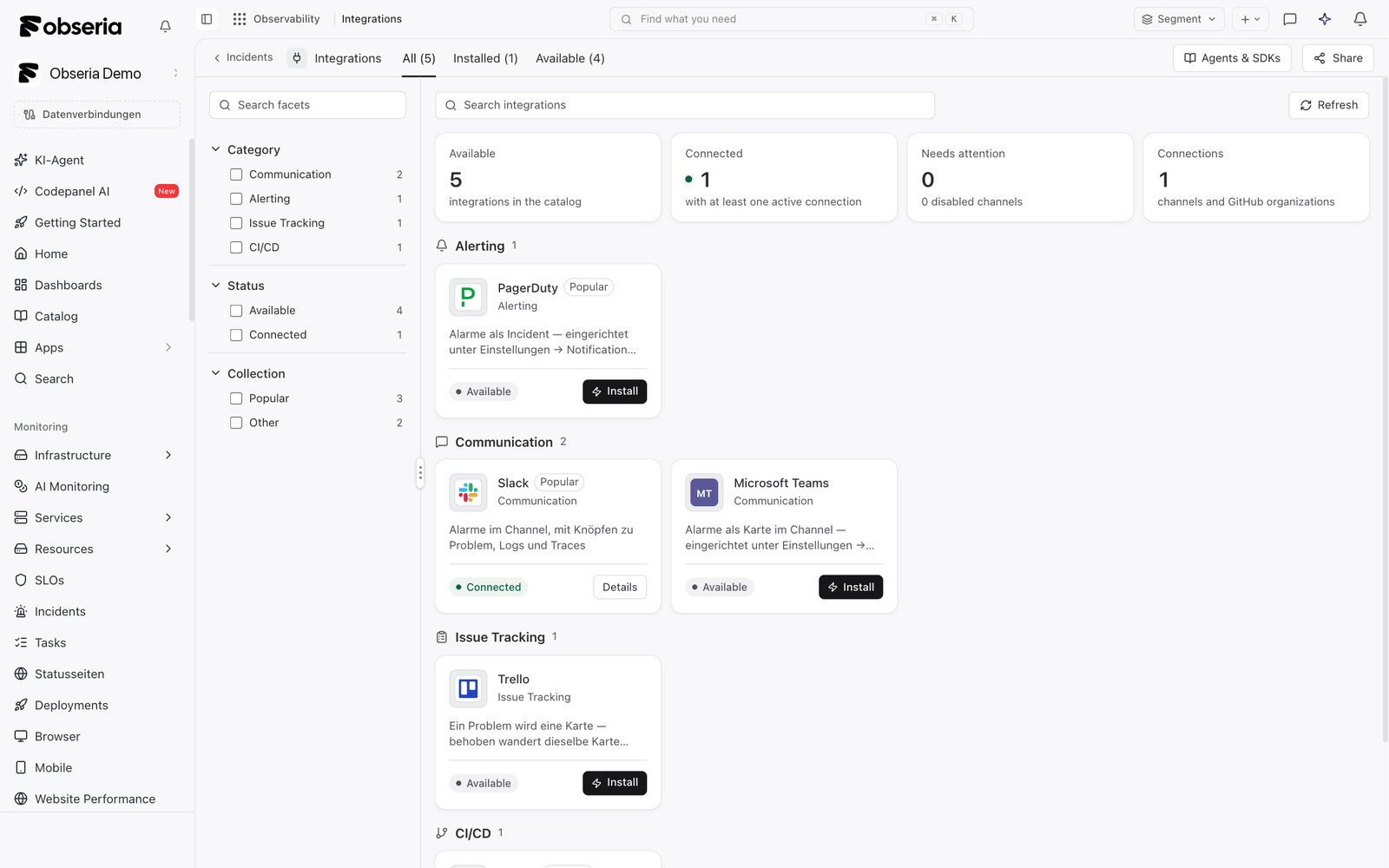
Integrations show every connection in one place, including GitHub organizations. Once GitHub is connected, Code Security and the AI review can read your repositories.
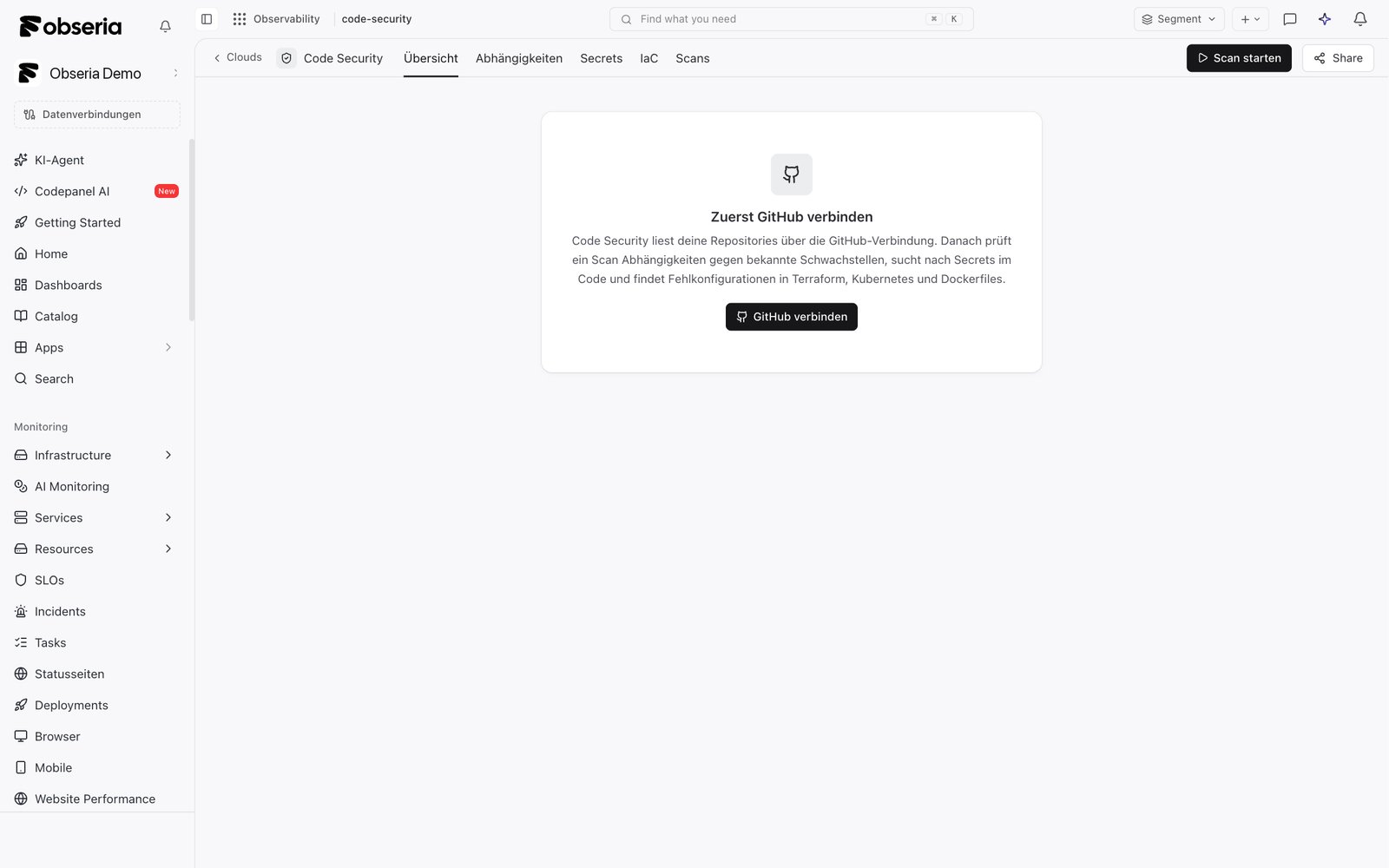
A scan checks dependencies against known vulnerabilities, searches for secrets in the code and finds misconfigurations in Terraform, Kubernetes and Dockerfiles.
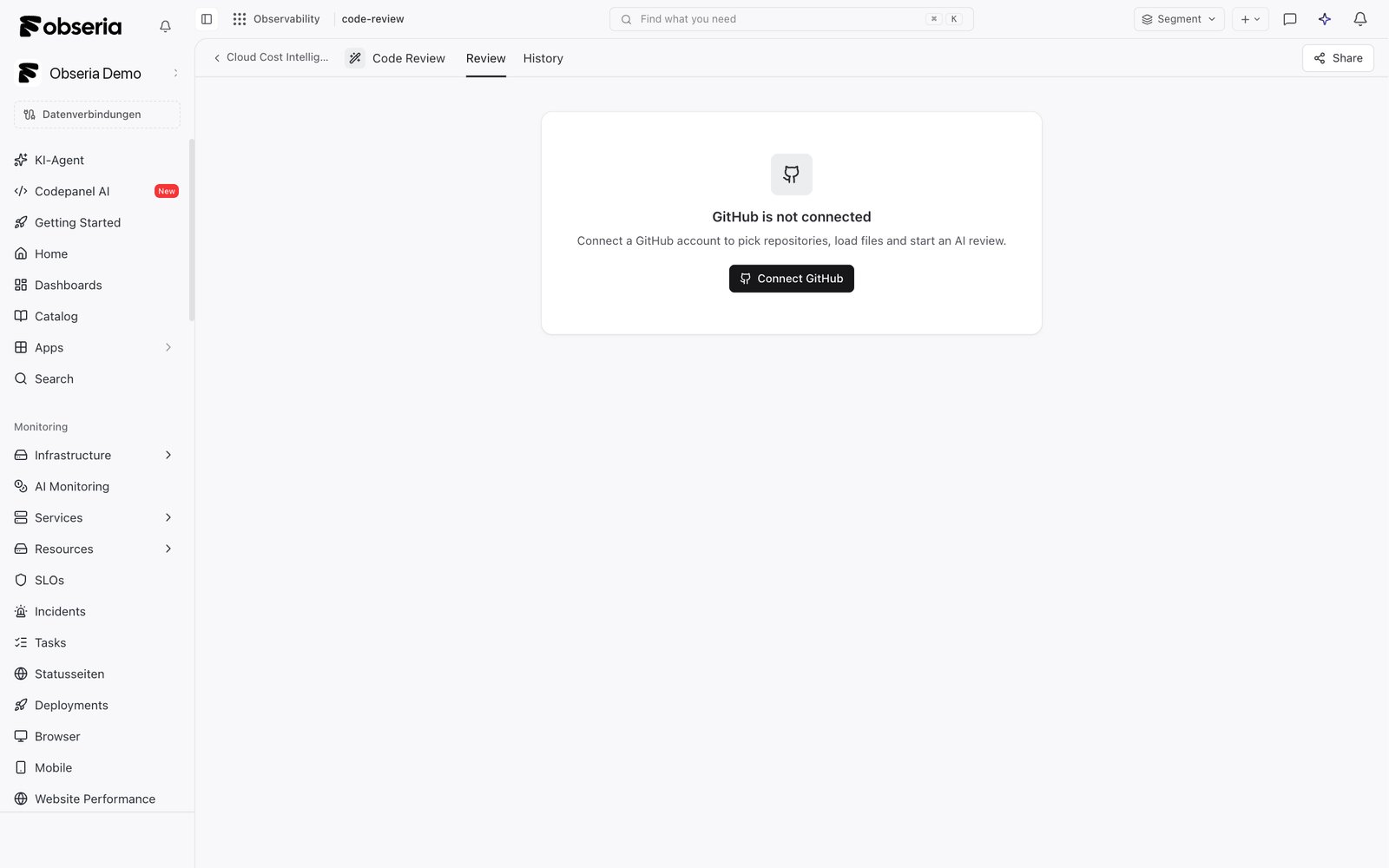
Pick a repository, load the files and start an AI review. Findings come with a summary and a severity from info to critical.
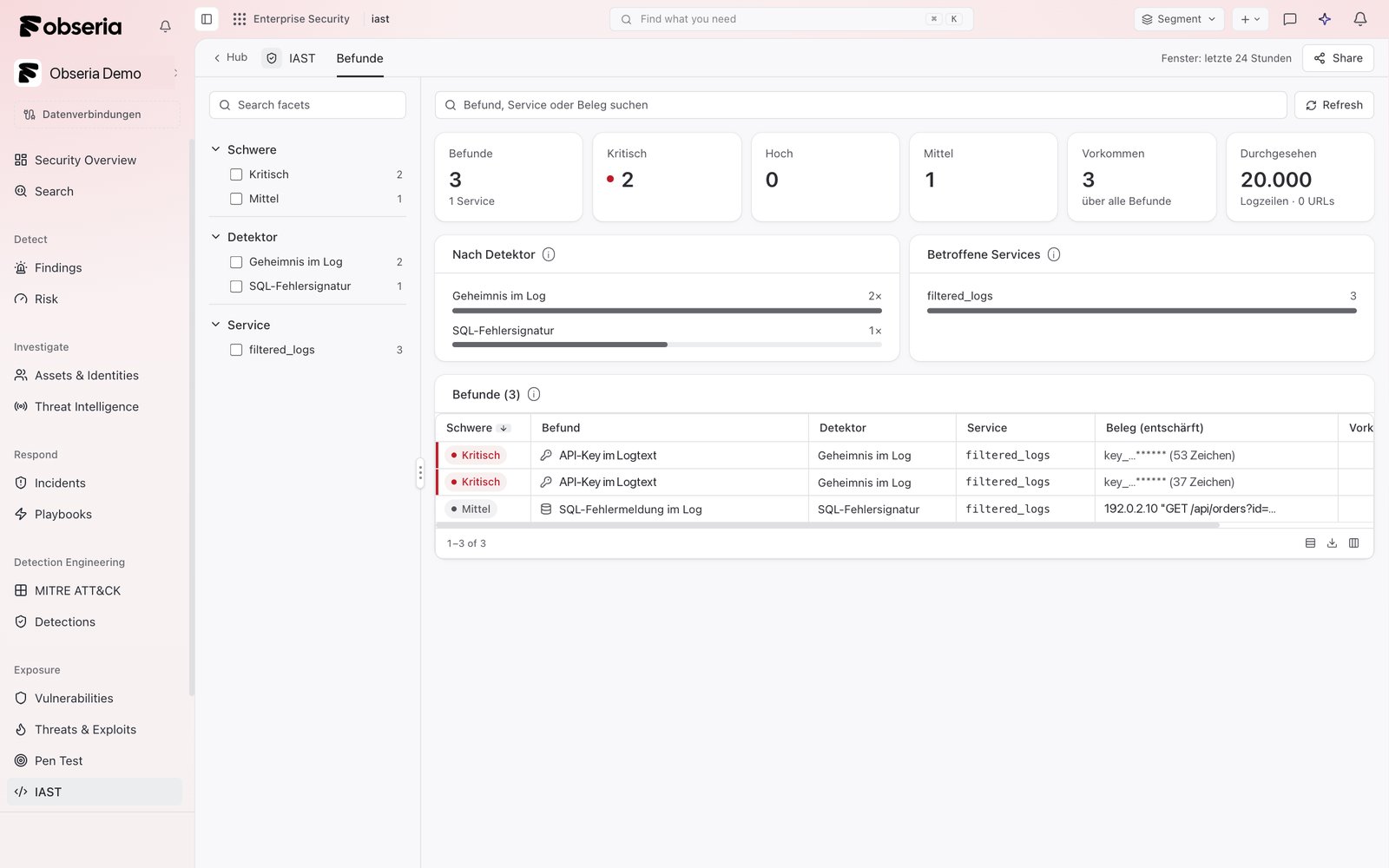
Runtime code analysis reviews log lines and requests and reports secrets in logs or SQL error signatures, with affected service and redacted evidence.
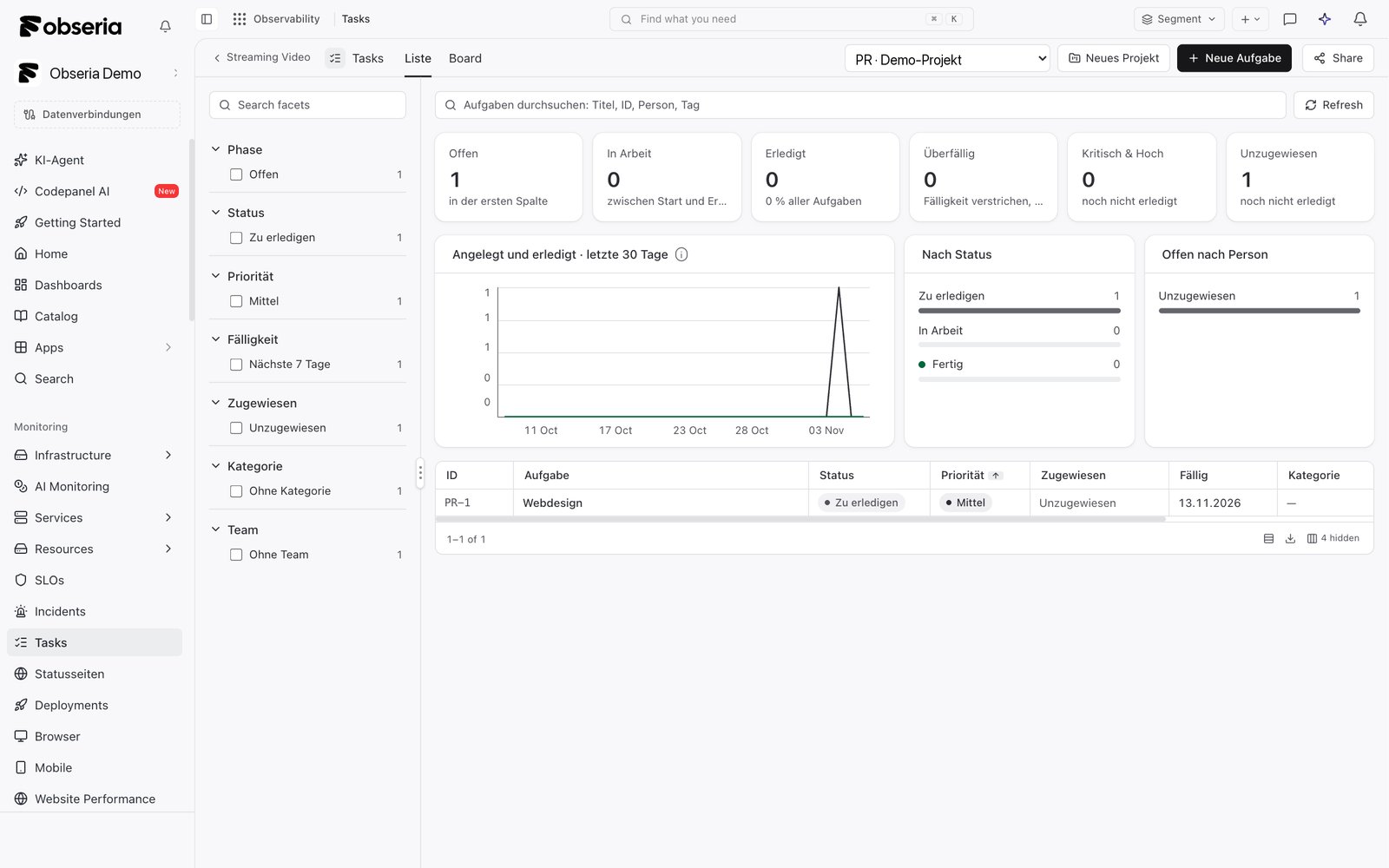
Turn important findings into tasks with priority, due date and assignee, and follow them as a list or on a board until they are done.
Detects vulnerabilities in the running application based on real calls.
Learn more →Checks the libraries you use for known vulnerabilities and licenses.
Learn more →Analyzes source code without running it and finds insecure patterns.
Learn more →Brings source code security checks together in one place.



Connect GitHub once. Code Security and the AI code review then read the repositories and branches you choose, without extra build steps.
A scan checks dependencies against known vulnerabilities, searches code and Git history for secrets and finds misconfigurations in Terraform, Kubernetes and Dockerfiles.
Start an AI code review for a repository and branch, with your own instructions if needed. Findings come with a summary and a severity from info to critical.
Runtime code analysis evaluates the logs and requests of your running services and confirms issues such as secrets written to logs or SQL error signatures.
Upgrade the dependency, rotate the secret or change the configuration, track the work as a task and run the scan again to see the result.
Most of the code in a typical application comes from open-source packages. Software composition analysis in Obseria inventories these dependencies for ecosystems such as npm, PyPI, Maven and Cargo and compares the versions you use with published advisories.
For every vulnerable package, Obseria shows the affected version, the severity and, where one exists, the version that fixes the problem. That turns a long advisory into a concrete next step: upgrade to this version. Licence information is checked as well, so a dependency with an unsuitable licence is noticed before it becomes part of a release.
Because the scan works on the repositories connected through GitHub, every project is checked the same way, including internal tools and older services that rarely get attention. On request, the inventory can be exported as a software bill of materials (SBOM).
Secret scanning searches code and Git history for passwords, API keys and tokens. Scanning the history matters: a key that was committed once remains retrievable even after the line was removed. Matches are shown with a redacted snippet, so the finding itself does not expose the secret again.
IaC security applies the same idea to infrastructure. Obseria checks Terraform files, Kubernetes manifests and Dockerfiles for unsafe settings such as publicly accessible storage or missing encryption, before the change reaches a cloud account or cluster.
Both checks run as part of the same scan as the dependency analysis, and their results have their own tabs in Code Security. That keeps the picture per repository complete: vulnerable libraries, leaked credentials and risky configuration side by side.
Static code analysis looks at source code without running it and finds insecure patterns such as SQL built from user input. In Obseria, it is combined with an AI code review: you choose a repository and branch, optionally add your own instructions, for example to focus on authentication code, and start the review.
Obseria loads the files, reviews them one by one and writes a summary of what it found. Each finding is rated from info to critical, so reviewers can spend their time on the changes that need attention instead of reading every line with the same intensity.
Completed reviews are kept in the history, which makes it easy to compare branches or to look back at what was flagged before a release. The AI review supports your reviewers; it does not merge or change code on its own.
Some weaknesses are invisible in the source code. A secret may only appear when a library logs a full request, and an injection attempt only shows once real traffic arrives. Runtime code analysis in Obseria evaluates the log lines and requests of your running services and looks for exactly these signals.
Detectors recognise issues such as secrets written to logs, credentials in URLs, cleartext HTTP and SQL error signatures. Each finding shows its severity, the detector, the affected service, how often it occurred and redacted evidence, together with a recommended fix. Facets for severity, detector and service make it quick to narrow down the list.
Because the analysis uses the telemetry already flowing into Obseria, it complements the repository scans: static checks show what could go wrong, runtime analysis shows what actually does.
GitHubnpmPyPIMavenCargo Kubernetes manifests
 Dockerfiles
Code security is the practice of finding and fixing security weaknesses in the software a team writes, the libraries it depends on and the configuration it ships with. It covers more than the source code itself: a modern application consists of a few thousand lines of your own code, hundreds of open-source packages, infrastructure definitions and a fair number of credentials that must never end up in a repository.
The goal is simple to state and hard to achieve: catch problems as early as possible, when they are cheap to fix, and still notice the ones that only show up once the application is running. That is why code security is usually not a single tool but a set of complementary checks, often grouped under the term application security testing.
Each method has blind spots. SAST does not know which code paths are used in production, SCA only knows vulnerabilities that have already been published, and runtime analysis only sees the parts of the application that are actually exercised. Used together, they cover each other's gaps.
Shift left means moving security checks closer to the developer: into the pull request, the branch and the build, instead of a review shortly before release. Problems found while the change is still fresh in mind are fixed in minutes rather than days.
Shifting left does not make runtime checks obsolete. New vulnerabilities are published every day for libraries that were considered safe yesterday, configuration drifts, and some weaknesses only appear with real traffic. A sound code security programme therefore combines early checks in the development workflow with continuous observation of the running services.
The first scan of an existing code base often produces more findings than a team can handle in a sprint. Good prioritisation keeps the work manageable:
Our guide on prioritising vulnerabilities with CVSS, EPSS and runtime context explains these factors in more detail.
Introducing code security works best in small steps. Connect the repositories, run a first baseline scan and agree on what counts as must-fix, for example all critical findings and every leaked secret. Fix those first, then make the scan part of the regular workflow so that new findings are seen as they appear. Only after the baseline is under control is it worth tightening the rules further. Teams that start with strict blocking rules on day one tend to switch the tool off again.
Obseria Code Security brings the checks described above into the same platform that already holds your logs, metrics and traces:
Code Security currently works with repositories hosted on GitHub. It finds and explains problems; fixing them, merging the change and rotating leaked credentials remains with your team.
Repository scans for dependencies (software composition analysis), secrets and infrastructure as code, an AI code review with static analysis (SAST), and runtime code analysis (IAST) based on the telemetry of your running services. Findings are collected per repository and service on the same platform as your logs, metrics and traces.
Code Security and the AI code review currently read repositories through a GitHub connection. You connect GitHub once and then choose the repositories and branches to scan or review.
Software composition analysis checks dependencies from ecosystems such as npm, PyPI, Maven and Cargo for known vulnerabilities and licences. It shows the fixed version where one exists and can produce a software bill of materials (SBOM).
You select a repository and branch and can add your own instructions. Obseria loads the files, reviews them, writes a summary and rates each finding from info to critical. Past reviews stay available in the history.
Yes. Secret scanning searches both the code and the Git history for passwords, API keys and tokens. Matches are shown with a redacted snippet. A leaked secret should always be rotated, because removing it from the code does not invalidate it.
SAST analyses source code without running it and catches issues early, before release. IAST, or runtime code analysis, looks at the running application and real calls. It confirms whether a problem actually occurs and finds issues that are not visible in the code, such as secrets written to logs.
Code Security finds and explains problems, but it does not fix them on its own: it does not open pull requests, change code or rotate credentials for you. Dependency checks rely on published advisories, so vulnerabilities that are not yet known cannot be reported, and runtime analysis only covers services whose telemetry reaches Obseria. Repositories outside GitHub cannot be connected today.
Code Security covers code, dependencies and configuration in your repositories plus runtime code analysis. Application Security focuses on detecting attacks and threats in the running application. Both run on the same platform and share the same services, logs and traces.
Detects attacks and threats in the running application.
→Puts vulnerabilities into the context of the running services.
→Security monitoring with detections, findings and MITRE ATT&CK.
→Incidents, alerting and case management for follow-up work.
→Workflows triggered by events, webhooks or schedules.
→In 30 minutes we show you how Obseria works in your environment and answer your questions on setup, privacy and pricing.
