
Observability for gaming: smooth launches, fair matches, safe accounts
Follow every login, match and purchase through your game backend, keep launches and live events stable and detect attacks on player accounts early














Detecting account takeover and credential stuffing
Which login signals reveal automated attacks on player accounts, and how to alert on them.
Read nowPlayers notice every millisecond.
A game is a live service: logins, matchmaking, inventories, stores and chat run around the clock, and players leave reviews faster than a ticket is opened.Launch day is a load test in production
Releases, seasons and live events bring millions of players at once. Queues, databases and third-party login services hit their limits together.
Latency hides between services
A slow match search can come from the matchmaker, a session store, a region or a party service. Without traces, every team suspects another.
Accounts and items are valuable
Credential stuffing, account takeover and traffic floods target players and their inventories, and they often look like a normal peak at first.
Observability use cases for Gaming
From login to end of match: where game studios start with Obseria.Game backend and matchmaking
Login, matchmaking and sessions
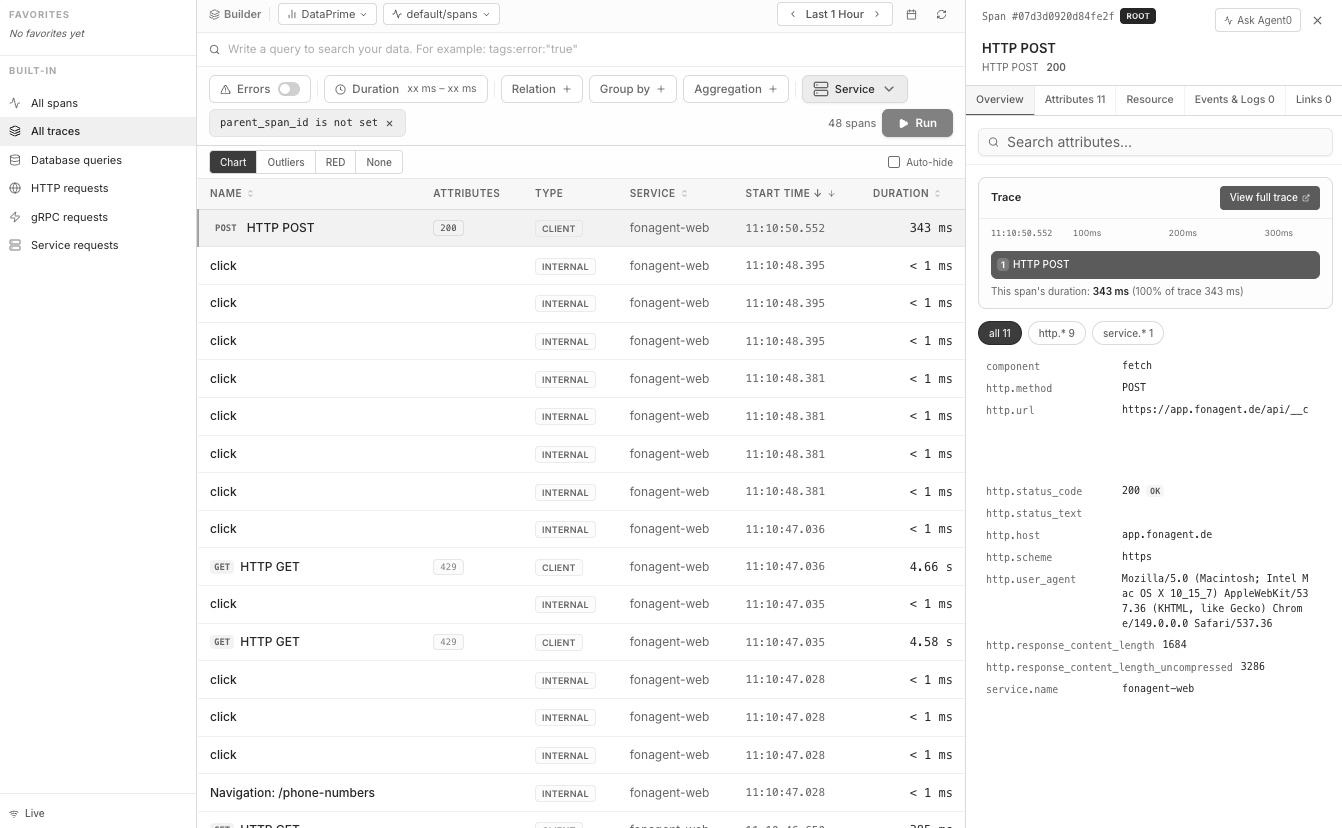
Trace login, party, matchmaking and session allocation across services and regions, with p99 latency per step instead of averages.
Distributed tracingGame servers on Kubernetes
Watch pods, nodes and autoscaling of dedicated server fleets, and see restarts, OOM kills and CPU throttling during a match peak.
Kubernetes monitoringSession stores, queues and databases
Monitor Redis, Kafka and databases behind inventories and leaderboards, including consumer lag and slow queries.
Infrastructure observabilityLaunches and live ops
Launch and event readiness
Compare load with earlier events, let anomaly detection flag unusual traffic and set SLOs with burn-rate alerts for login and match search.
SLO monitoringPatches and hotfixes
Mark every deployment on the timeline and see at once whether a patch raised error rates or crash numbers.
Deployment trackingMobile and web clients
Crash reports with stack trace, device and app version for Android and iOS, plus browser RUM for launchers, web shops and account pages.
Mobile app monitoringPlayer safety and operations
Account takeover and credential stuffing
Turn login events into detection rules for failed-login bursts, impossible travel and suspicious sessions, and follow a session from login to every endpoint it called.
Application securityTraffic floods and status communication
Spot sudden traffic surges against login and store endpoints and keep players informed with a public status page linked to your uptime checks.
Status pagesLive ops agents and workflows
An agent reviews new incidents and player support signals on a schedule, and workflows route follow-up tasks with approvals.
Obseria AgentsPlayer data and payments, protected
Game studios process player accounts, chat data and in-game purchases. Obseria helps keep personal data out of telemetry and document security events.
- GDPRHashing of player IDs and masking of e-mail and IP addresses before storage, with a published data processing agreement under Art. 28 GDPR.
- PCI DSSAudit logs and access control that support the evidence for your own PCI DSS assessment of store and payment systems.
- Security eventsLogin and security events kept queryable for investigations, with retention you define per data type.
- EU data residencyTelemetry stored in an EU region you choose per organization.
- Audit trailChanges to alerts, monitors and access are logged with the person or key that made them.
Already in production use at companies
Together with our implementation partner Webect Digital Group GmbH, Obseria already monitors the systems of companies of different sizes. Webect handles rollout, integration and ongoing support, while our product team keeps developing the platform based on their feedback.
- In production use at customers
- Rollout and support by Webect Digital Group
- Personal contacts in Germany
- Product development close to customers
The Obseria platform for Gaming
Application Observability
Tracing for login, matchmaking, inventory and store services.
Learn moreInfrastructure Observability
Kubernetes, server fleets, Redis, Kafka and databases in one topology.
Learn moreApplication Security
Runtime context for login attacks and vulnerable dependencies.
Learn moreDigital Experience
Mobile crash reporting, browser RUM and synthetic checks.
Learn moreGaming observability FAQ
No. Obseria is not a DDoS protection service and does not filter traffic. It helps you see unusual traffic early, correlate it with the logs of your CDN, firewall or protection provider and communicate with players through a status page.
Obseria has no dedicated game engine SDK. Backends in Go, Java, .NET, Node.js, Python and other languages send data via OpenTelemetry, and mobile clients on Android and iOS are covered by mobile monitoring and crash reporting.
Yes, at the infrastructure level: hosts, containers and Kubernetes workloads, their CPU, memory, network and restarts. Game-specific metrics such as tick rate or players per server can be sent as custom metrics via OpenTelemetry.
Authentication events arrive as structured logs next to the traces of the same requests. You build detection rules as queries and alerts and follow a suspicious session from login to the endpoints it called.
Prices depend on data volume and the products you use. See all plans on the pricing page.
Launch day without the drama.
See how Obseria follows every login, match and purchase through your game backend.